Choosing a preschool can feel overwhelming, especially when parents are trying to compare curriculum, teacher experience, school readiness, safety, and daily care. Families searching for pre-k programs in Las Vegas, quality preschool or preschool in Henderson often want to know one important thing: will this program truly prepare my child for kindergarten?
That is where the Nevada Pre-K Standards can help. These standards give early childhood educators a framework for supporting children before they enter kindergarten. They help guide learning in areas such as literacy, math, social development, physical growth, creative expression, science, and problem-solving.
For parents, understanding the Nevada preschool curriculum makes it easier to know what a quality program should provide. A strong preschool should do more than keep children busy. It should help children feel safe, build confidence, develop social skills, explore new ideas, and grow at a healthy pace.
If you are searching for preschool in Las Vegas this guide will help you understand what Nevada Pre-K Standards mean and what to look for in a quality preschool program.
What Are Nevada Pre-K Standards?
The Nevada Pre-K Standards are learning and development guidelines for children before kindergarten. They help teachers plan activities, classroom routines, and learning experiences that support the whole child.
These standards are not meant to make preschool feel like elementary school. Instead, they provide a developmentally appropriate framework for early learning through play, exploration, teacher guidance, and social interaction.
A preschool aligned with Nevada Pre-K Standards should support children in areas such as:
- Language and early literacy
- Math readiness
- Science exploration
- Creative expression
- Physical development
- Health and safety
- Social studies
- Approaches to learning
- Technology awareness
- Social-emotional development
For parents comparing preschool curriculum Las Vegas options, these standards can be a helpful guide. They show whether a program is focused on meaningful development rather than random activities.
Why Nevada Pre-K Standards Matter for Parents
Parents do not need to memorize every standard. What matters most is understanding how the standards show up in the classroom.
A quality preschool should help children:
- Build early communication skills
- Recognize letters, sounds, numbers, and patterns
- Develop independence
- Learn to follow routines
- Practice sharing and taking turns
- Explore science, nature, and creativity
- Strengthen fine and gross motor skills
- Build confidence in group settings
- Prepare socially and emotionally for kindergarten
When a school follows a thoughtful early learning framework, children benefit from intentional care and instruction. They are not pushed too hard too soon, but they are also not left without structure.
This balance is important for preschool readiness in Las Vegas and kindergarten readiness because children need both learning skills and emotional confidence before entering school.
Standards Are Not the Same as Curriculum
One common parent question is whether standards and curriculum are the same thing. They are related, but they are not identical. The standards describe what children should be working toward. The curriculum is how teachers help children get there.
For example, a standard may focus on early counting. A teacher might support that skill through:
- Counting blocks during play
- Singing number songs
- Sorting objects by color or size
- Reading counting books
- Using calendar routines
- Playing simple matching games
This is why a strong preschool curriculum program should feel hands-on and age appropriate. Children should not be sitting with worksheets all day. They should be learning through play, movement, music, stories, conversation, and guided exploration.
What Quality Pre-K Programs Should Include
Families searching for pre-k programs in Las Vegas should look for a program that supports school readiness in a balanced way. Pre-k should help children prepare for kindergarten while still honoring the needs of young learners.
A quality pre-k program should include:
- Early literacy activities
- Letter and sound recognition
- Number sense and early math
- Story time and comprehension
- Fine motor skill development
- Cutting, tracing, drawing, and writing practice
- Social-emotional learning
- Group activities
- Outdoor play
- Creative art and music
- Classroom routines
- Problem-solving opportunities
The best pre-k programs help children build both academic and life skills. A child who can recognize letters but cannot manage frustration, follow routines, or interact with peers may still struggle in kindergarten. That is why the whole-child approach matters.
Social-Emotional Learning in Preschool
Social-emotional learning is one of the most important parts of early childhood education. Parents searching for preschool social emotional learning in Las Vegas or social emotional learning preschool are often looking for a program that helps children build confidence, emotional awareness, and healthy relationships.
In preschool, social-emotional learning may include:
- Naming feelings
- Practicing patience
- Sharing materials
- Taking turns
- Using words to solve problems
- Building friendships
- Listening during group time
- Learning classroom expectations
- Developing empathy
- Managing big emotions with teacher support
These skills help children succeed in school and life. They also make the classroom feel safer and more positive for everyone. A quality preschool should not treat social-emotional learning as an extra. It should be part of the daily routine.
How Preschool Supports Kindergarten Readiness
Kindergarten readiness is about more than knowing letters and numbers. Children also need confidence, independence, communication skills, and the ability to participate in a classroom community.
A strong program focused on kindergarten readiness in Las Vegas should help children practice:
- Following simple directions
- Staying engaged in group activities
- Recognizing letters and numbers
- Holding pencils, crayons, and scissors
- Listening to stories
- Asking and answering questions
- Cleaning up after activities
- Managing transitions
- Working alongside peers
- Expressing needs with words
These skills develop gradually. A high-quality preschool gives children daily opportunities to practice them in a supportive environment.
Preschool Readiness Begins Before Pre-K
Many parents think readiness begins at age 4, but the foundation starts much earlier. Toddlers and younger preschoolers build early readiness through routines, play, language, movement, and social interaction. For families searching for early childhood education in Las Vegas, it is helpful to choose a program that supports development across every stage.
Early preschool classrooms should encourage:
- Language growth
- Sensory play
- Music and movement
- Simple problem-solving
- Potty training support
- Self-help skills
- Sharing and turn-taking
- Confidence during separation
- Early exposure to books, colors, shapes, and numbers
By the time children enter pre-k, these early experiences help them feel more confident and capable.
What Parents Should Expect from Preschool for 4 Year Olds
Parents searching for preschool for kids in Las Vegas usually want a program that prepares children for kindergarten while still keeping learning joyful. A classroom for 4-year-olds should include more structured learning than a toddler room, but it should still be hands-on and play-based.
Parents should expect activities such as:
- Letter recognition
- Name writing practice
- Counting and number games
- Story sequencing
- Science discovery
- Art and creative expression
- Calendar and weather activities
- Classroom jobs
- Music and movement
- Social problem-solving
- Outdoor play
- Fine motor practice
A strong 4-year-old preschool program should help children grow academically, socially, and emotionally without creating pressure or stress.
What Quality Preschool Looks Like in the Classroom
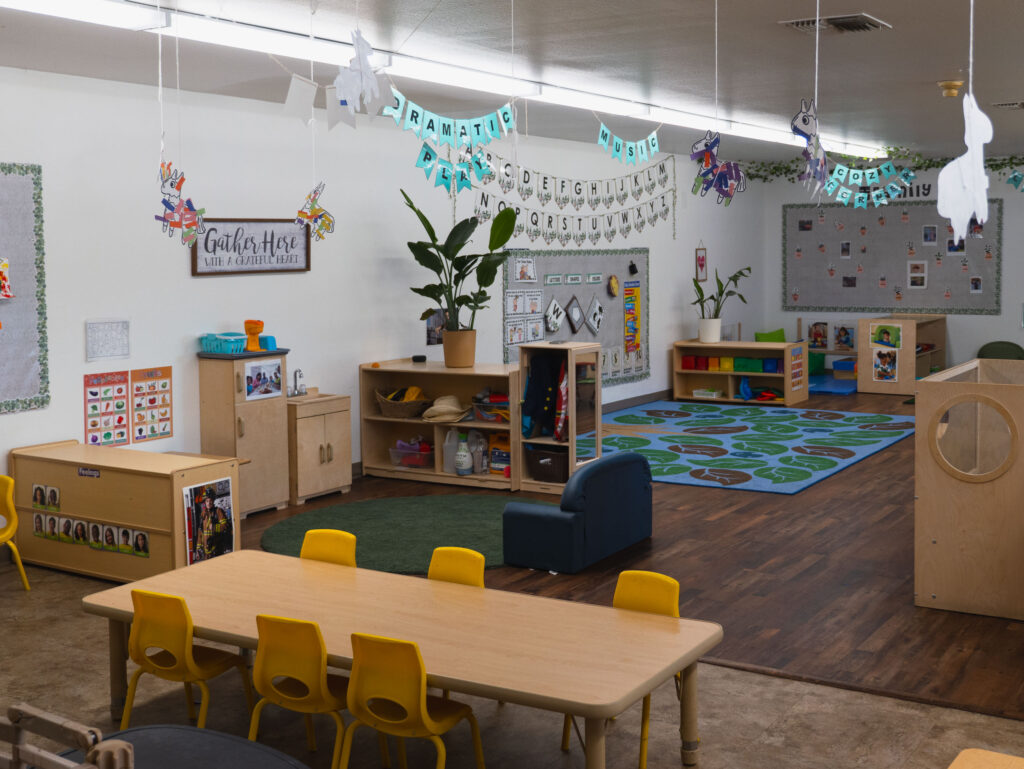
A quality preschool in Las Vegas or a quality preschool program should be easy to recognize during a tour. Parents can look for signs that learning is intentional, children are engaged, and teachers are actively supporting development.
Positive signs include:
- Teachers speak warmly and respectfully
- Children are engaged in meaningful activities
- Classrooms are clean and organized
- Learning materials are age appropriate
- Children have access to books, art, blocks, and sensory play
- Routines are clear and predictable
- Outdoor play is part of the day
- Teachers support problem-solving
- Children are encouraged to be independent
- Families receive clear communication
A strong preschool should feel welcoming, structured, and child-centered.
Questions Parents Should Ask About Nevada Pre-K Standards
During a preschool tour, parents can ask simple questions to understand how the program supports Nevada Pre-K Standards.
Helpful questions include:
- How does your curriculum align with Nevada Pre-K Standards?
- How do you support kindergarten readiness?
- What does social-emotional learning look like in your classroom?
- How do teachers track each child’s progress?
- What early literacy and math activities are included?
- How often do children have outdoor play?
- How do you support children who learn at different paces?
- How do you communicate progress with parents?
- What does a typical pre-k day look like?
- How do you prepare children for the transition to kindergarten?
A quality preschool should answer these questions clearly and confidently.
Why Local Families Compare Las Vegas and Henderson Preschools
Many families search across both Las Vegas and Henderson because daily routines often cross city lines. Parents may live in Henderson, work in Las Vegas, or commute through Southeast Las Vegas.
When comparing locations, parents should consider:
- Distance from home or work
- Drop-off and pick-up convenience
- Classroom quality
- Teacher communication
- Curriculum approach
- Safety practices
- Schedule flexibility
- Long-term program options
- Fit for the child’s personality
The best preschool choice is the one that supports both the child and the family’s daily life.
How Grateful Hearts Preschool Supports Early Learning
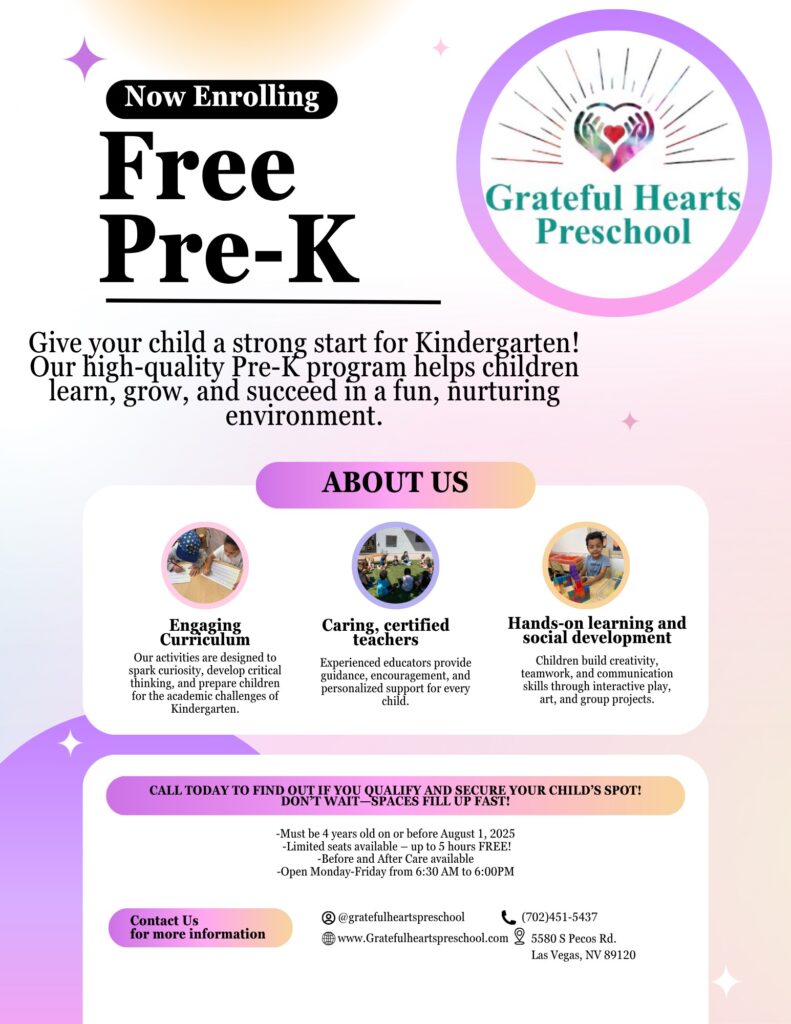
Grateful Hearts Preschool provides a nurturing early learning environment for children from infancy through kinder prep. The school’s whole-child approach supports emotional, social, physical, and cognitive growth through play-based learning, daily routines, and caring teacher relationships.
For families searching for pre-k programs in Las Vegas, preschool curriculum, or preschool readiness in Las Vegas, Grateful Hearts Preschool offers a supportive environment where children can grow with confidence.
Families appreciate the focus on:
- Nevada Pre-K aligned learning
- Social-emotional development
- Play-based instruction
- Daily communication
- Outdoor play
- Flexible care options
- Experienced educators
- Early literacy and math readiness
- A warm and nurturing school community
Grateful Hearts Preschool helps children build the skills they need for kindergarten while still honoring the joy and curiosity of early childhood.
Frequently Asked Questions About Nevada Pre-K Standards
What are Nevada Pre-K Standards?
Nevada Pre-K Standards are guidelines that help early childhood educators support learning and development before kindergarten. They cover areas such as literacy, math, science, physical development, creative expression, social studies, and social-emotional growth.
Do Nevada Pre-K Standards mean preschool is academic all day?
No. The standards support developmentally appropriate learning. A quality preschool should use play, stories, music, movement, art, outdoor time, and guided activities to help children build skills.
Why is social-emotional learning important in preschool?
Social-emotional learning helps children understand feelings, build friendships, follow routines, solve problems, and develop confidence. These skills are essential for kindergarten readiness.
What should I look for in pre-k programs Las Vegas?
Look for caring teachers, Nevada Pre-K aligned curriculum, early literacy and math activities, social-emotional learning, outdoor play, strong communication, and a safe classroom environment.
How do I know if my child is ready for kindergarten?
Kindergarten readiness includes academic, social, emotional, and physical skills. Children should be building independence, communication, early literacy, number awareness, routines, and confidence in group settings.
Schedule a Preschool Tour
Understanding the Nevada Pre-K Standards can help parents choose a preschool with more confidence. A quality program should support your child’s whole development, including early academics, social-emotional learning, independence, creativity, and kindergarten readiness.
If you are searching for quality preschool in Las Vegas or pre-k programs in Las Vegas Grateful Hearts Preschool welcomes you to visit.
Schedule a tour today to learn how Grateful Hearts Preschool supports preschool readiness, social-emotional growth, and a strong foundation for kindergarten.